
A Complex Orthopaedic Challenge
Five-year-old Labrador, Max presented to Advanced Vetcare London with a debilitating case of right-sided osteoarthritis secondary to a chronic radiocarpal bone (wrist) fracture. His case exemplifies the complexity often encountered in advanced orthopaedic surgery and the critical decision-making required when complications arise during procedure.
Clinical History and Presentation
Max's case began in 2024 with the onset of right forelimb lameness. Initially, conservative management with steroid injections provided relief and his condition appeared to resolve. However, several flare-ups occurred throughout the year, each requiring additional steroid treatment and, while the first treatment proved highly effective, subsequent injections had minimal impact.
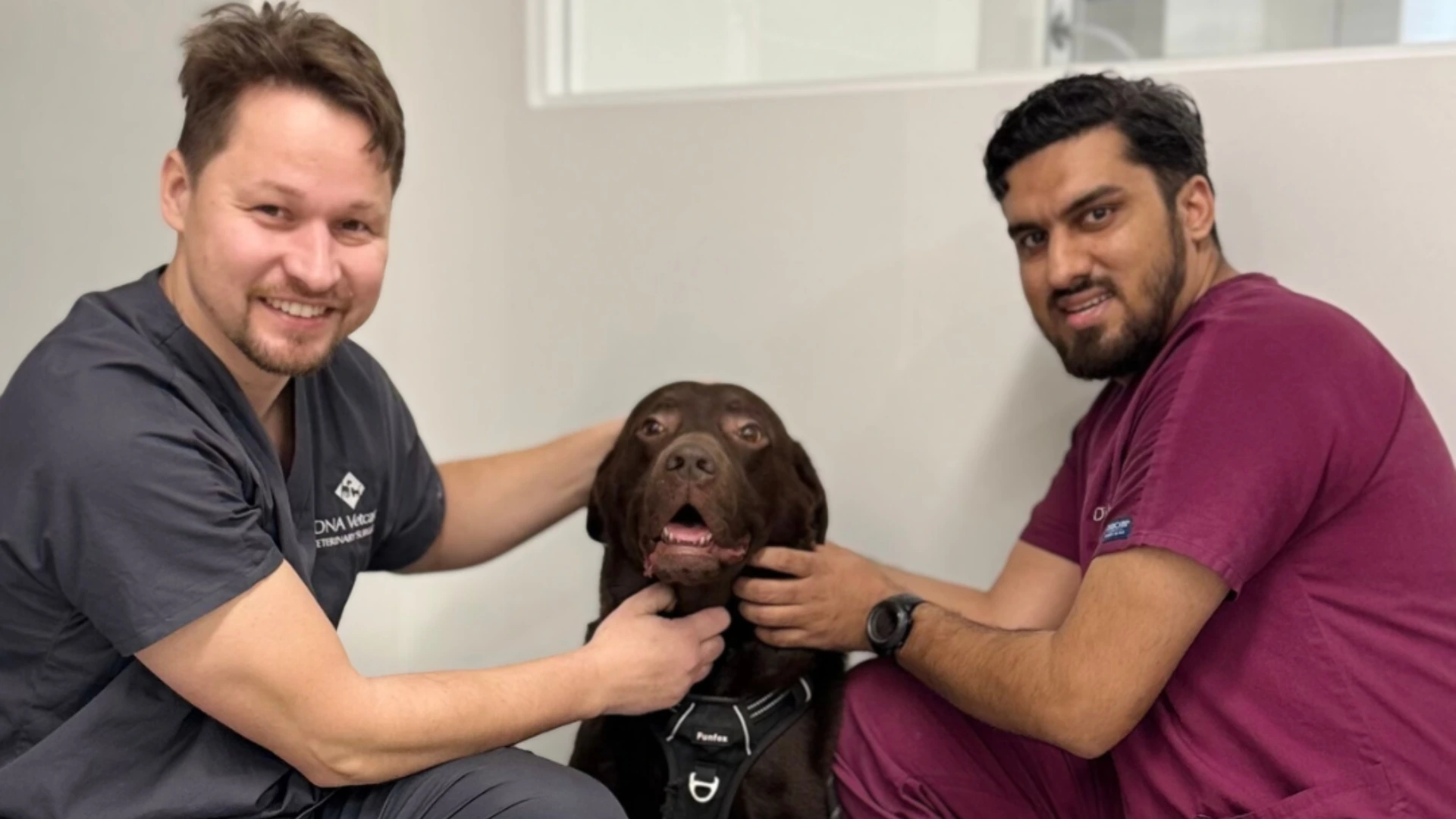
By September 2025, Max's condition had deteriorated significantly. Swelling and pain in the right wrist (carpal) joint intensified, and by October, a distinctive clicking sound became evident within the joint. Despite another steroid infiltration, there was no meaningful improvement in his condition. Max's quality of life had declined dramatically - the once-active dog was now restricted to short walks in the front garden only, with his pain and mobility managed through medication.
Diagnostic Findings
After referral by Max’s primary vet, clinical examination and imaging revealed the underlying issue: a fracture of the radiocarpal bone, coupled with severe osteoarthritis. Scans also showed swollen tissue with some calcium buildup sitting on top of Max’s carpal joint.
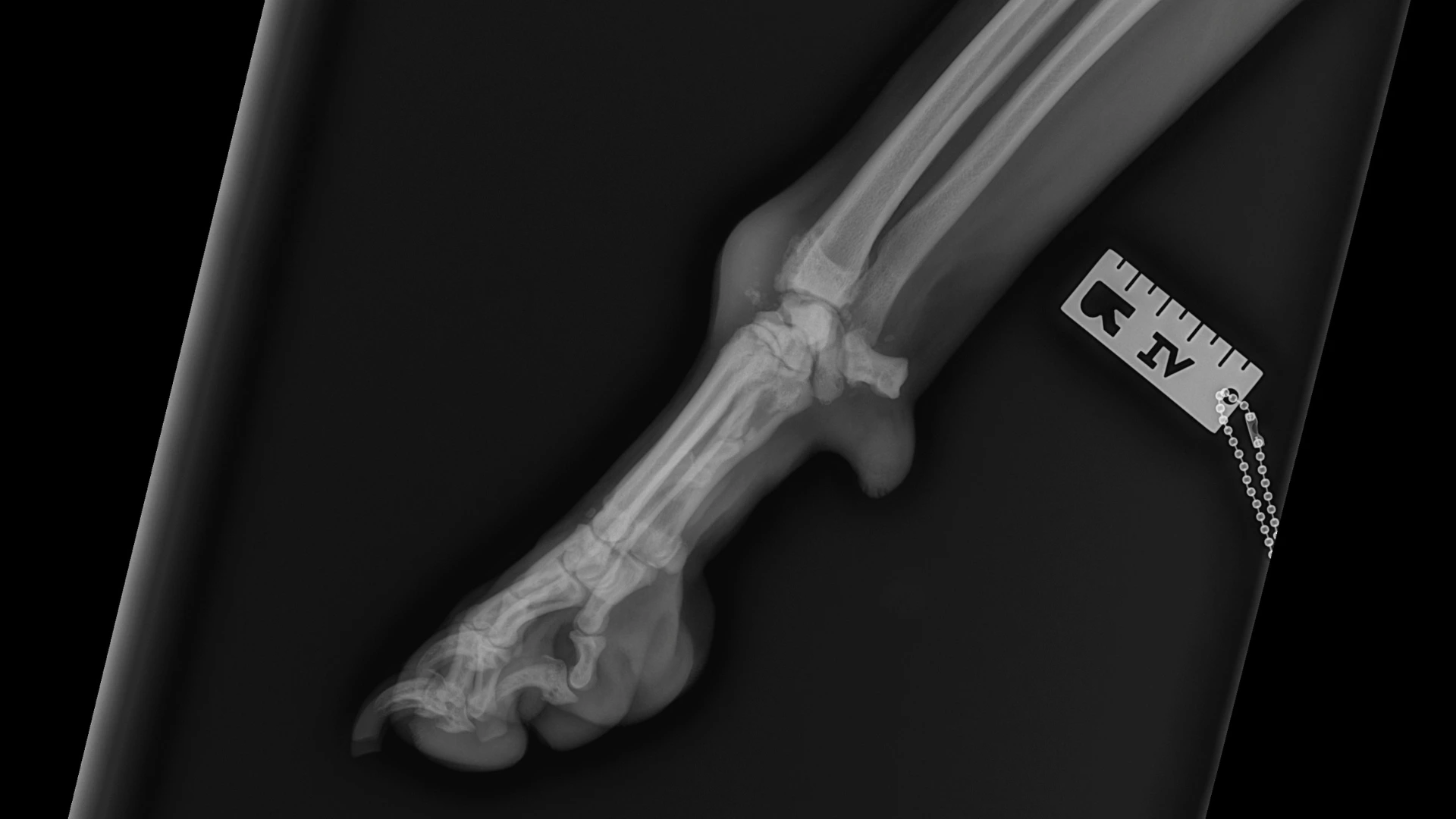
The diagnosis was clear: a procedure to fuse Max’s wrist joint (right-sided pancarpal arthrodesis) would be necessary to restore function, maintain Max’s mobility and eliminate pain.
The Surgery: Fixing Max's Wrist
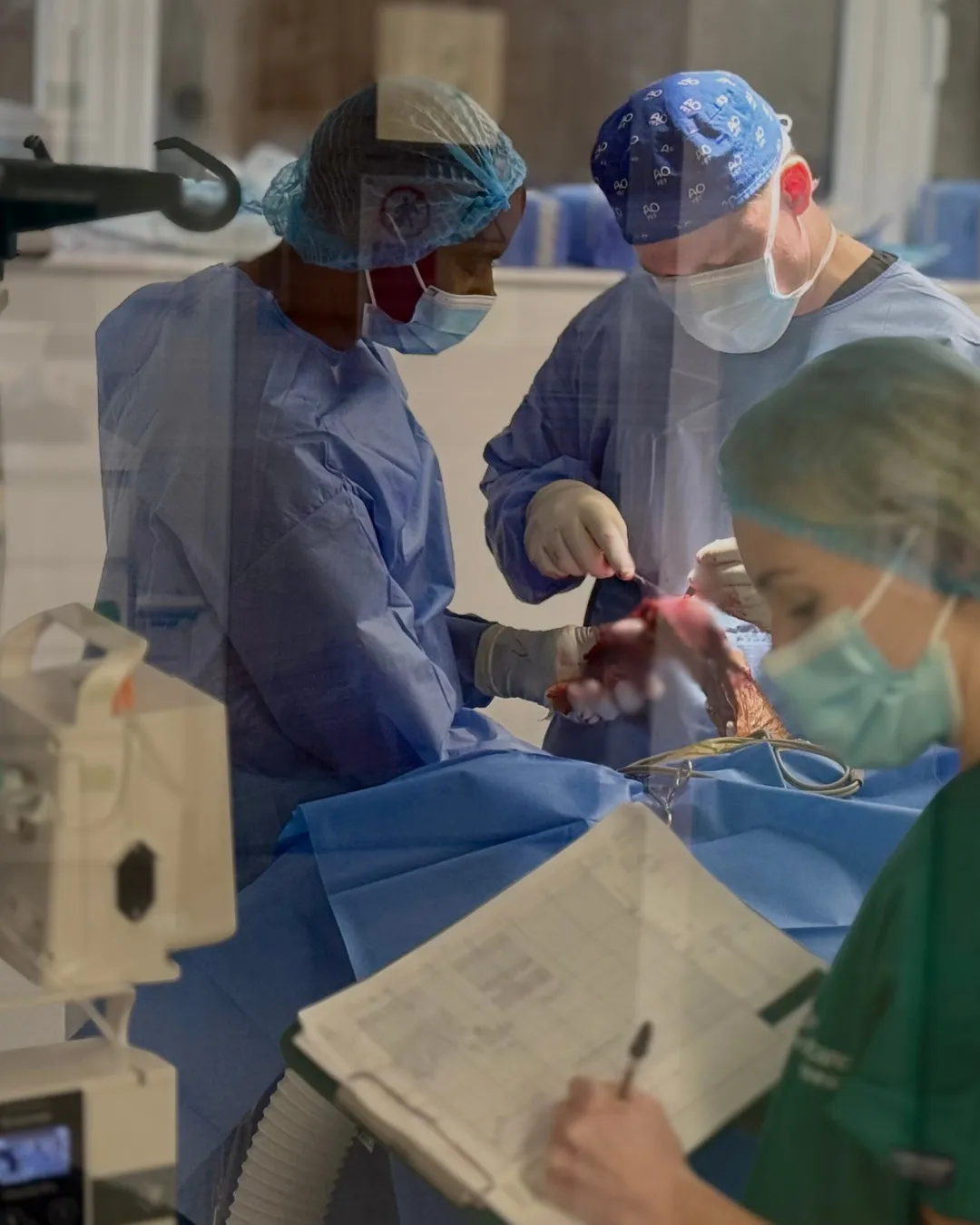
On December 4th, 2025, the Advanced Vetcare London surgical team, led by Jakub Köcher-Vodnárek performed Max's surgery. The goal was to permanently fuse the bones of his wrist joint together, eliminating the painful movement and instability that had been causing his lameness.
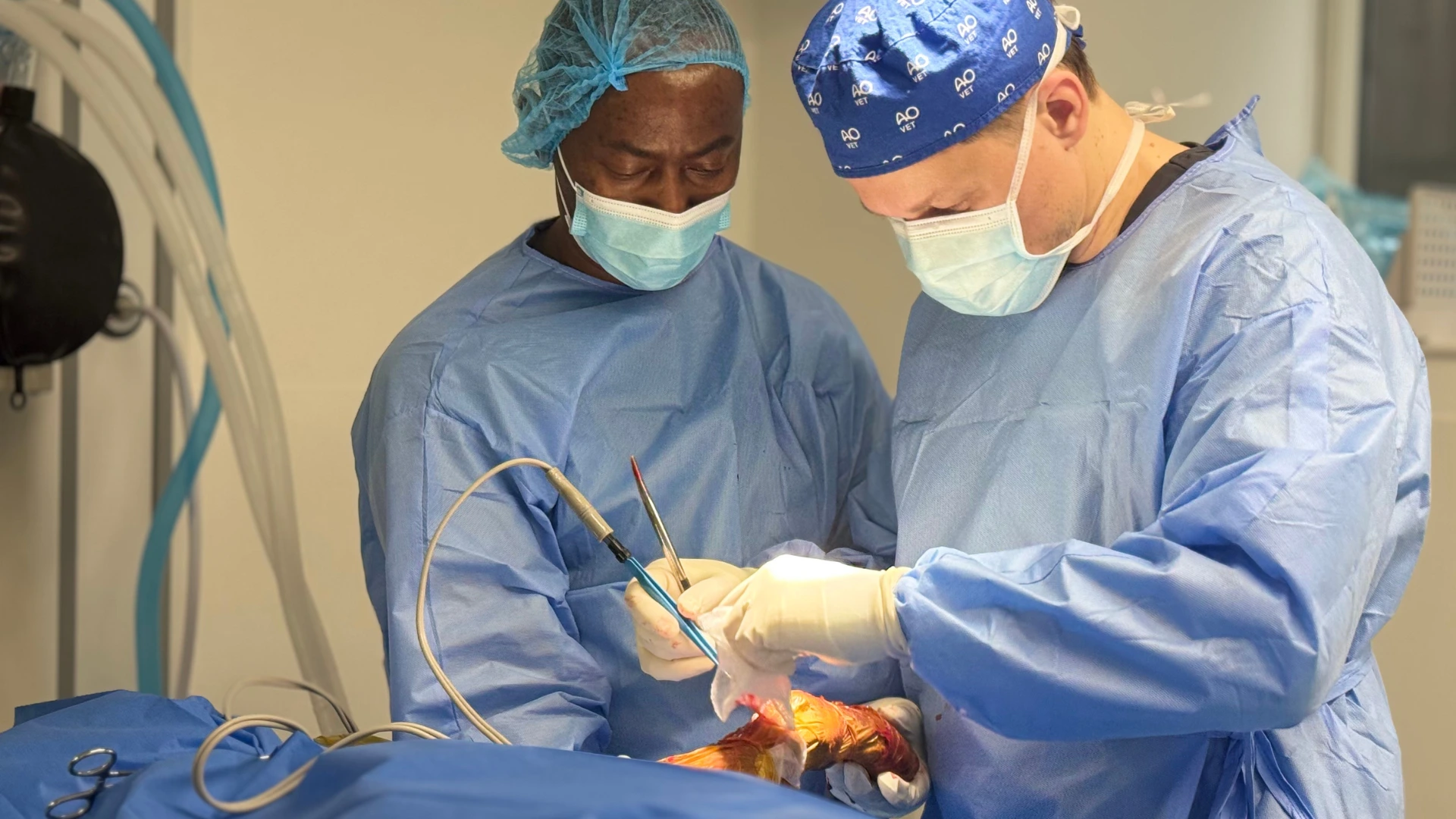
When the surgical team opened Max's wrist, they discovered just how severe the chronic damage had become. Over months of inflammation and repeated injury, thick scar tissue had formed around the joint, essentially gluing the tendons to the joint capsule.
One of Max's small wrist bones (the radiocarpal bone) had broken into pieces, with a fragment pushed out of position. This broken bone, combined with the severe arthritis, meant the joint could no longer function normally.
The surgical team prepared Max's joint for fusion, removing damaged cartilage and packing the joint with bone graph material to act as a supportive scaffold as new bone grows. A specially designed metal plate was then carefully positioned to hold everything in alignment as the bones fused together.
Surgery, even when performed by experienced veterinary surgeons, sometimes presents unexpected challenges. With Max's bones already weakened from his chronic disease, this meant that as the team tightened the screws to compress the joint and hold everything firmly in place, one of the bones in Max's paw (the third metacarpal bone) cracked through the screw hole.
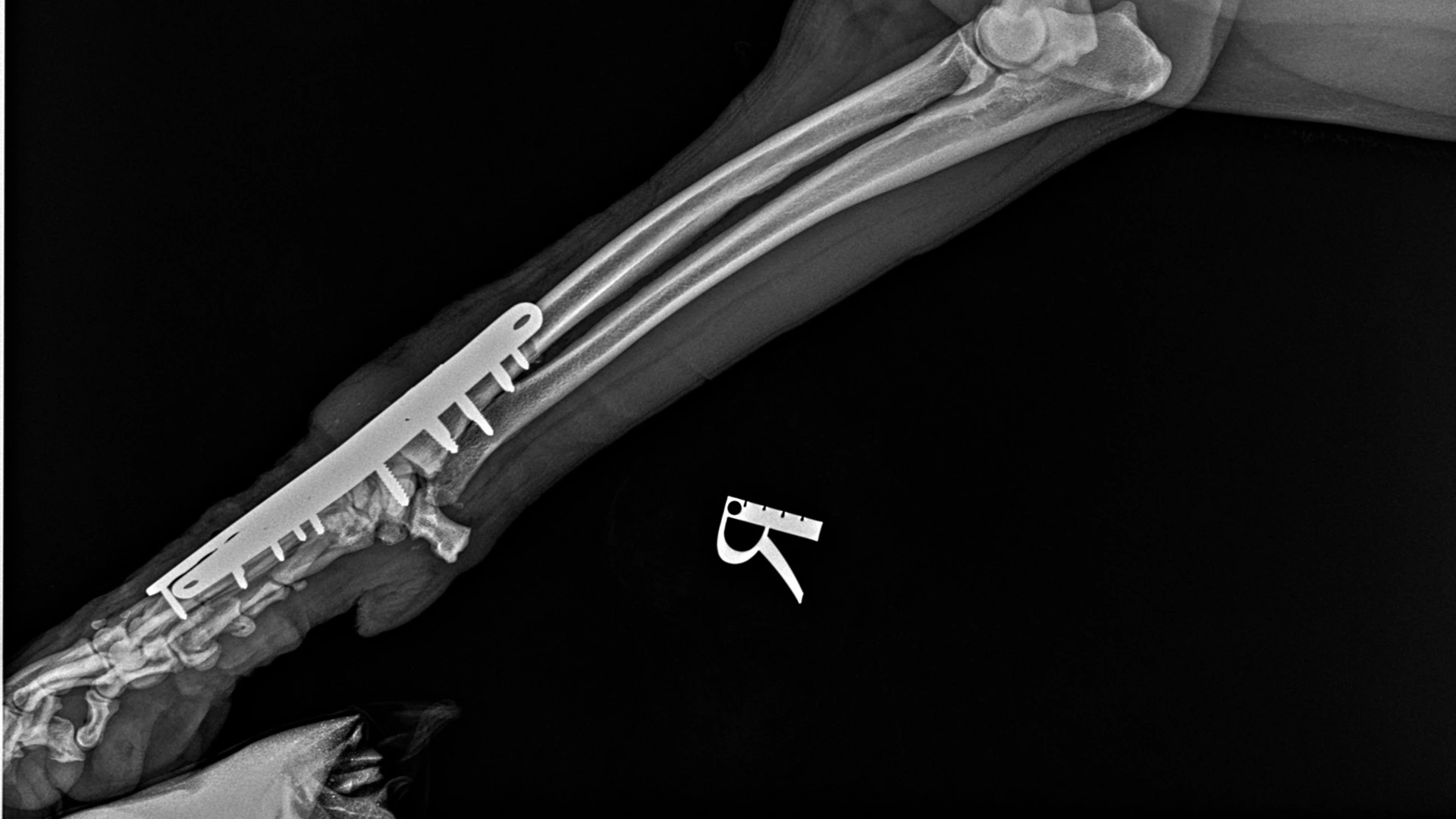
This moment is where surgical experience and adaptability become crucial. The team reassessed, making the decision to reposition the plate to better support the cracked bone. A second, smaller plate was also added for additional support. This second plate acted like a splint, running along the neighbouring bone and providing extra stability to protect the crack while it healed.
Max's Road to Recovery
After surgery, Max was transferred to Streatham Hill Vets - Advanced Vetcare London’s 24-hour sister site - where the team could monitor him closely and ensure he remained comfortable with appropriate pain relief.
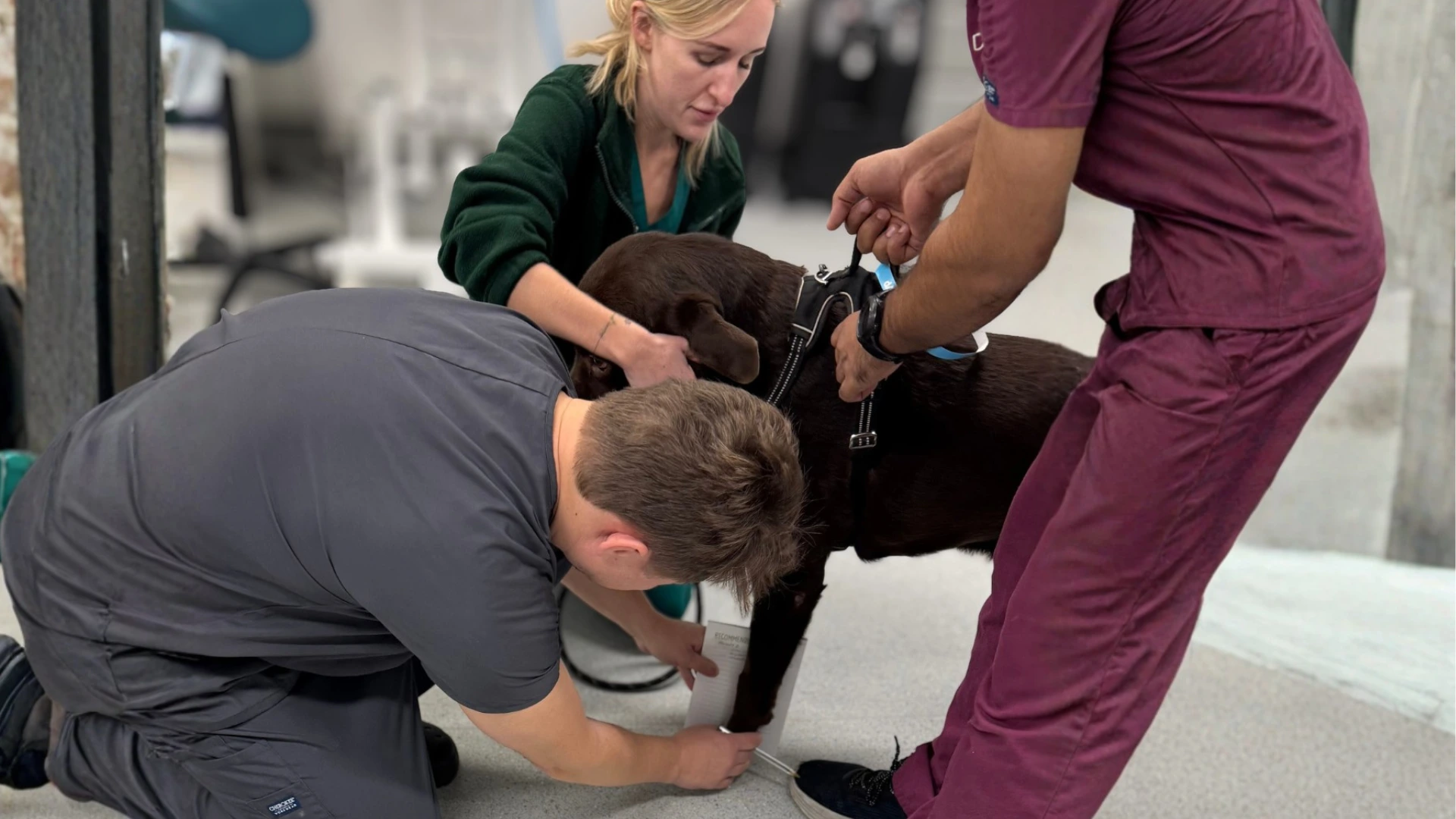
Max's recovery plan needed to account for two things: the wrist fusion itself and the unexpected crack in his paw bone. Both required time and careful management to heal properly.
The Long-Term Plan
Recovery from wrist fusion is a marathon, not a sprint. Max's plan included strict rest, with no running, jumping or playing for 16 weeks. While challenging for a usually active dog, this step is essential to allow bones to fuse properly and the crack to heal.
Max's exercise was also restricted, with only short, slow walks with an extra sling under his belly for extra support. Max also wore a special rigid splint to provide extra protection for his bones as they healed.
Looking Ahead
Max has already showed promising progress, is free of pain killers for the first time in many months and has an excellent chance of returning to comfortable mobility. While his fused wrist won't bend anymore, dogs adapt remarkably well to this - the stability and pain relief far outweigh the loss of joint motion. Within a few months, Max should be able to return to normal walks and activities, free from the pain and instability that had been limiting his life.
This case exemplifies Advanced Vetcare London's commitment to advanced surgical techniques, comprehensive patient care and the expertise required to manage even the most challenging orthopaedic conditions. When things don't go according to plan, experience makes all the difference.
For referrals or consultations regarding complex orthopaedic cases, please contact our surgical team at Advanced Vetcare London.