
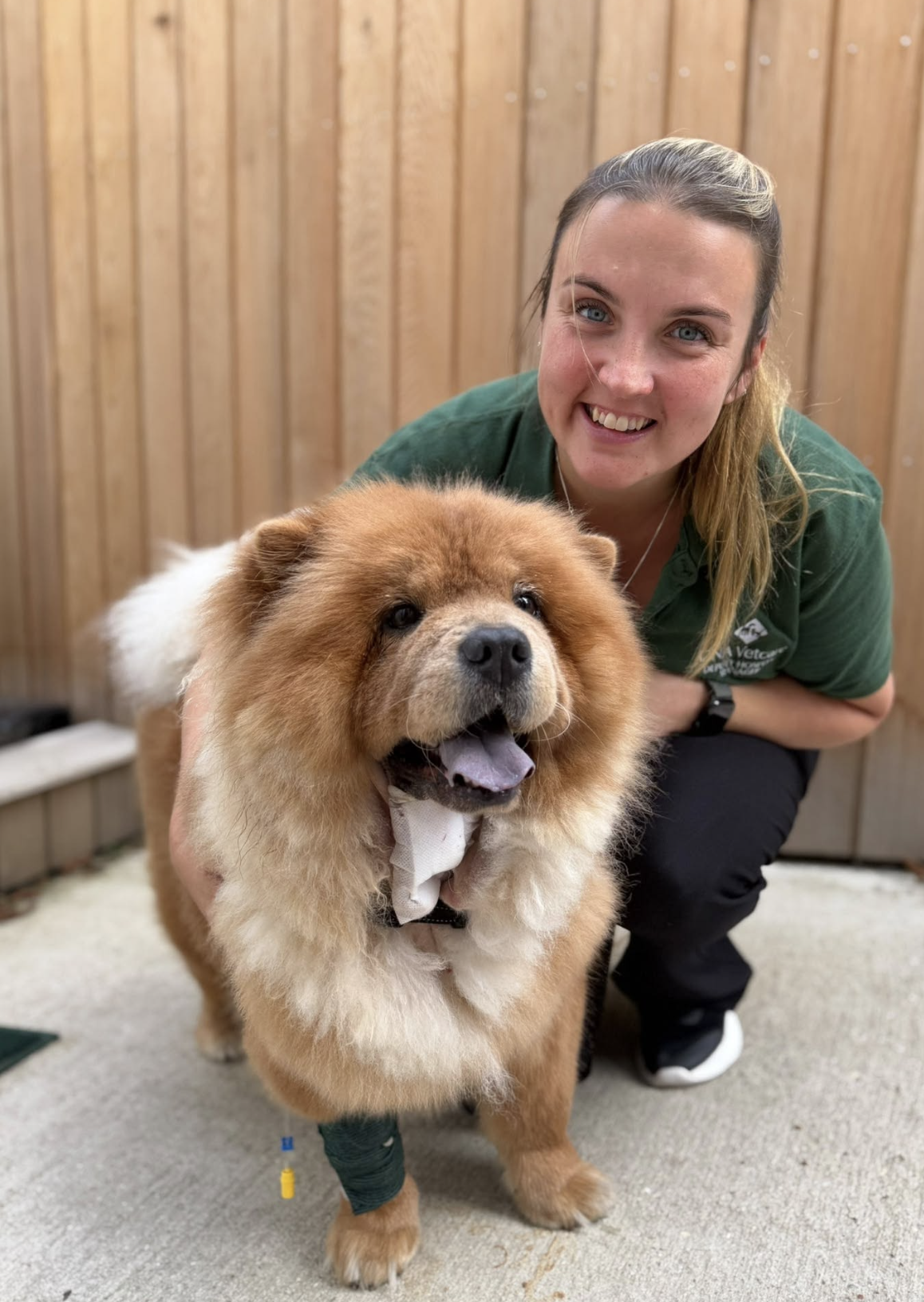
Gucci, a four-year-old Chow Chow, was referred to Advanced Vetcare London for a long-standing lump beneath his jaw.
What was hiding beneath the surface?
Advanced imaging and specialist surgery helped the team uncover the cause of Gucci’s unusual neck mass and determine the best course of treatment.
Finding the Problem
Gucci’s owner wanted advice about a lump beneath the right side of his jaw that had been present for several years. Although it had not caused any obvious discomfort or affected his ability to eat or swallow, the owner wanted it investigated and removed for peace of mind.
The lump was well defined and approximately the size of a golf ball. There were no obvious abnormalities in his mouth or enlargement of the surrounding lymph nodes.
CT imaging was used to reveal the extent and location of the mass beneath Gucci’s jaw.
Investigating the Causes
The CT scan identified a mass beneath the right side of Gucci’s jaw, close to the surrounding muscles, salivary gland and larynx.
Although the mass had been present for several years, imaging alone could not establish exactly what it was.
Possible causes included a chronic haematoma (a collection of blood within the tissues), a granuloma (a localised area of inflammation) or an abscess.
Initial testing suggested that Gucci’s lump was benign, but at the owner’s request, the lump was still surgically removed. We could then examine the mass in more detail to get a more definitive answer.

Understanding Lumps on Dogs
Benign lumps are common in dogs and can develop for several reasons.
Some, such as lipomas, form when fat cells grow into a mass beneath the skin, while others develop from skin cells, blocked hair follicles or small cysts.
The exact cause depends on the type of lump, but factors such as age, genetics and body weight can influence the likelihood of developing certain growths.
Most benign lumps do not spread to other parts of the body, although they can grow large enough to cause discomfort or interfere with movement.
Although Gucci’s lump looked benign during the initial assessment, it wasn't possible to know exactly what it was without examining a tissue sample. This is important because some cancerous lumps can look very similar to harmless growths.
New lumps should always be checked by a vet, particularly if they grow quickly, change in shape or texture, become painful, or start bleeding or discharging fluid. These changes do not necessarily mean a lump is cancerous, but they warrant further investigation.
Emergency veterinary attention may be needed if swelling around the neck develops rapidly and causes difficulty breathing or swallowing, or if there is significant bleeding.
Surgical removal of Gucci’s mass would allow the tissue to be examined under a microscope, providing a more definitive diagnosis. Its location on the neck also meant that careful surgical dissection was essential to protect nearby structures, including the jugular vein.
Gucci’s Treatment and Recovery
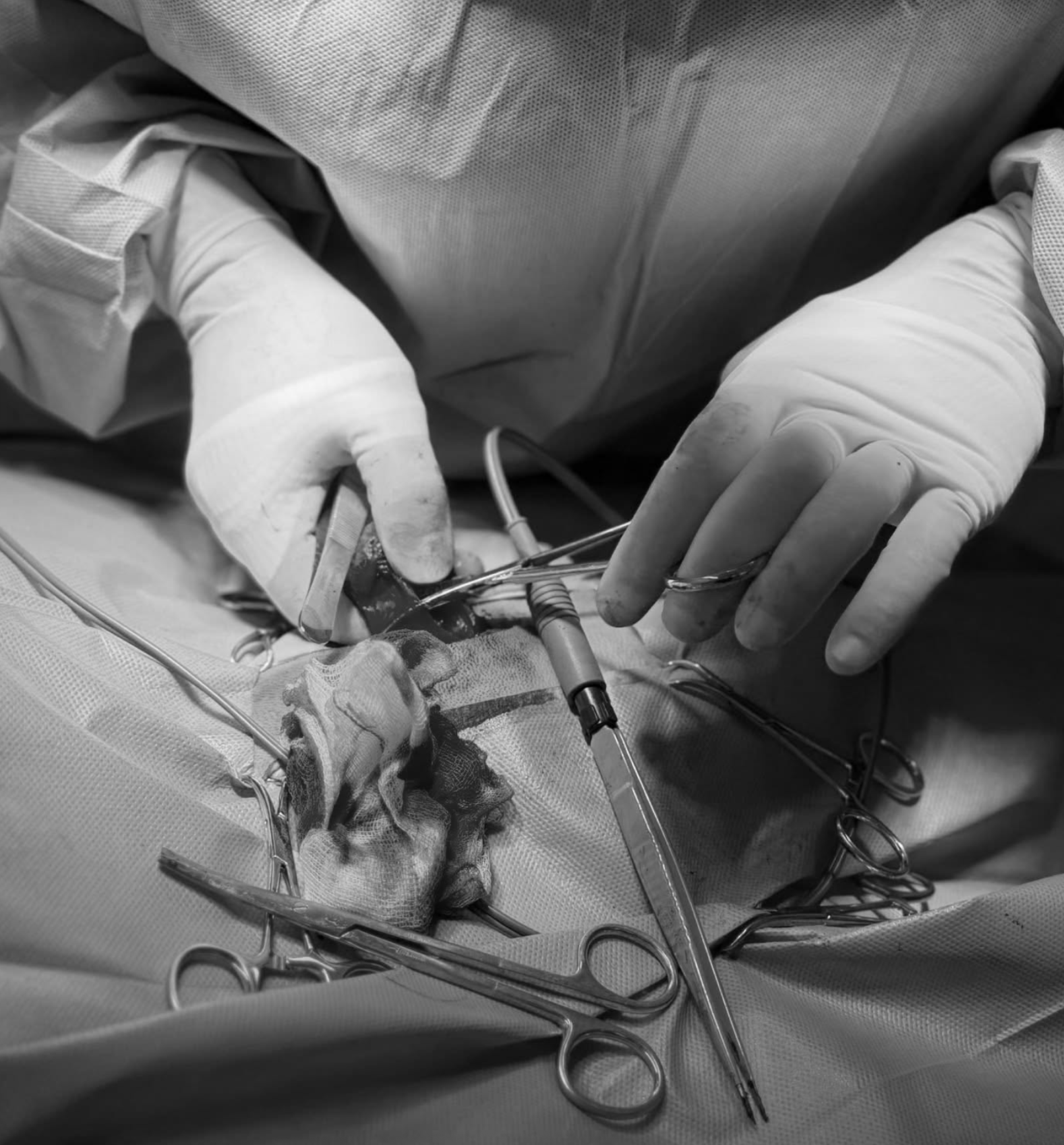
Our veterinary surgeon Christos Dorlis successfully removed the lump underneath Gucci’s jaw by carefully separating it from the surrounding tissues.
He recovered well from the procedure and went home later that day with pain relief and our postoperative care instructions.
We sent the mass for laboratory analysis, and histopathology confirmed it was a benign chronic haematoma, a long-standing collection of blood that had built up within the tissues.
As the mass had been successfully removed, no further treatment was needed. Gucci recovered well from surgery and did not require any additional intervention.
What This Case Teaches Us
“Gucci's case demonstrates the importance of individualised clinical decision-making.
“The cervical mass required surgical excision to establish a definitive diagnosis. Its location close to important anatomical structures required careful surgical dissection.
“Histopathology subsequently confirmed a chronic haematoma. This case highlights the importance of correlating imaging findings with clinical signs and tailoring treatment to each patient's needs.” - Dr. Christos Dorlis DVM, MRCVS Veterinary Surgeon.